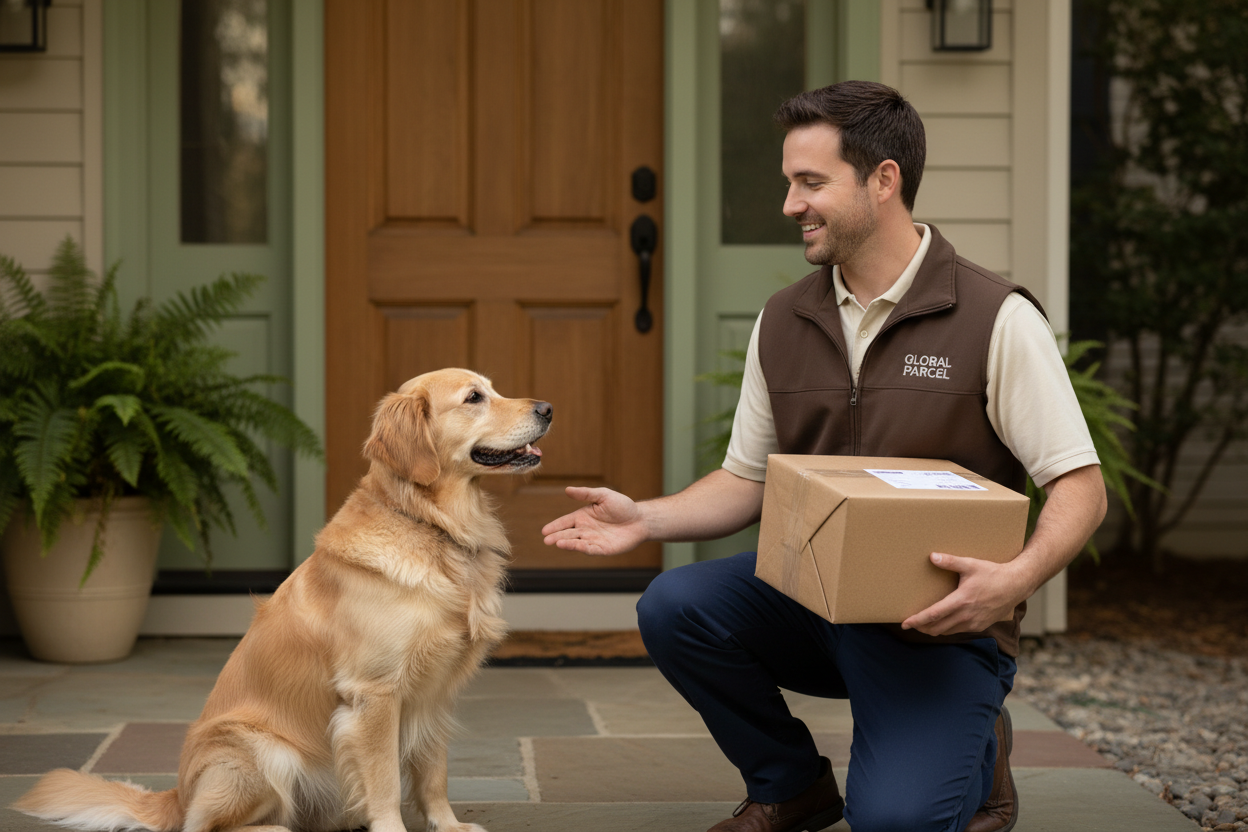
How to Train Your Dog to Be Friendly with Delivery People: A Complete Guide to Peaceful Doorstep Encounters 📦🐕
Table of Contents
1. Understanding Why Dogs React to Delivery People
2. The Foundation: Basic Training Principles
3. Step-by-Step Training Methods
4. Creating Positive Associations
5. Managing the Environment
6. Advanced Training Techniques
7. Troubleshooting Common Problems
8. Safety Considerations
9. Frequently Asked Questions
10. Conclusion
Picture this: the doorbell rings, and suddenly your sweet, gentle dog transforms into a barking, lunging creature that seems determined to protect your home from the “dangerous” delivery person. Sound familiar? You’re not alone in this daily drama that plays out in millions of homes across the country. 🏠
Training your dog to be friendly with delivery people isn’t just about convenience – it’s about creating a safer environment for everyone involved. Whether you’re dealing with a territorial terrier or an overly enthusiastic golden retriever, the right training approach can transform those chaotic doorstep encounters into peaceful interactions.
In this comprehensive guide, we’ll explore proven methods to help your furry friend become the welcoming committee member you’ve always wanted them to be. From understanding the psychology behind your dog’s reactions to implementing practical training techniques, we’ve got you covered every step of the way.
Understanding Why Dogs React to Delivery People 🤔
Before diving into training solutions, it’s crucial to understand what’s happening in your dog’s mind when that delivery truck pulls up. Dogs don’t inherently dislike delivery people – their reactions stem from natural instincts and learned behaviors that have been reinforced over time.
Most dogs view delivery people as intruders who approach their territory, make noise, and then mysteriously disappear. From your dog’s perspective, their barking and aggressive behavior “successfully” drives away the threat every single time. This creates a powerful reinforcement cycle that strengthens the unwanted behavior.
Additionally, delivery people often wear unfamiliar uniforms, carry large packages, and move with purpose – all of which can trigger your dog’s alert systems. The irregular timing of deliveries also means your dog can’t predict when these encounters will happen, keeping them in a state of heightened vigilance.
The Foundation: Basic Training Principles 🎯
Successful dog training with delivery people starts with solid foundational skills. Your dog should have a reliable understanding of basic commands before you tackle the more complex challenge of doorstep etiquette.
The “sit” and “stay” commands are absolutely essential. These form the building blocks of impulse control that your dog will need when faced with the excitement of a delivery. Practice these commands in various locations around your home, gradually increasing distractions to build your dog’s focus and reliability.
Equally important is the “quiet” or “enough” command. This gives you a way to interrupt your dog’s barking and redirect their attention back to you. Start practicing this command during low-stress situations, rewarding your dog immediately when they stop barking on command.
Consistency is key in all training efforts. Every family member should use the same commands and follow the same protocols. Mixed messages will only confuse your dog and slow down the training process.
Step-by-Step Training Methods 📚
Now let’s get into the meat of the training process. This systematic approach will help you gradually build your dog’s tolerance and positive associations with delivery scenarios.
Start by desensitizing your dog to delivery-related sounds. Play recordings of doorbell rings, truck engines, and footsteps at low volumes while your dog is relaxed. Gradually increase the volume over several training sessions, always rewarding calm behavior with treats and praise.
Next, practice the “place” command. Designate a specific spot where you want your dog to go when deliveries arrive – this could be their bed, a mat, or even just a particular corner of the room. Practice sending your dog to this spot multiple times throughout the day, making it a positive experience with treats and praise.
Role-playing exercises are incredibly effective. Have family members or friends dress up as delivery people and practice approaching your door. Start with the “delivery person” staying far away and gradually decrease the distance as your dog becomes more comfortable. Remember to reward calm, friendly behavior immediately.
Creating Positive Associations 🎉
The goal is to help your dog associate delivery people with good things happening. This requires changing their emotional response from fear or aggression to anticipation and excitement for positive experiences.
One effective technique is the “treat and retreat” method. When you see a delivery person approaching, immediately start feeding your dog high-value treats. Continue treating until the delivery person leaves, then stop the treats. This helps your dog learn that delivery people predict wonderful things happening.
Consider asking your regular delivery drivers to participate in training. Many are happy to help when they understand it will make their job easier and safer. Have them toss treats toward your dog (from a safe distance) without making direct eye contact or trying to pet your dog initially.
Timing is everything in this process. The treats and positive experiences must happen before your dog becomes reactive. If you wait until your dog is already barking and lunging, you’re actually rewarding the unwanted behavior.
Managing the Environment 🏡
Environmental management plays a huge role in successful training. Sometimes the simplest solutions are the most effective in preventing problems before they start.
Consider blocking your dog’s view of the front yard and street. Many dogs become reactive simply because they can see delivery trucks approaching from far away, giving them time to build up excitement and anxiety. Frosted window film or strategically placed furniture can help reduce visual triggers.
Create a designated safe space where your dog can retreat during deliveries. This should be a comfortable area with their favorite toys and bedding, positioned away from the front door chaos. Some dogs do better when they’re given the option to remove themselves from stressful situations.
If possible, establish a routine around delivery times. Many delivery services provide tracking information that allows you to anticipate arrivals. Use this to your advantage by preparing your dog with exercise, training sessions, or special activities that tire them out before the delivery window.
Advanced Training Techniques 🚀
Once your dog has mastered the basics, you can move on to more sophisticated training approaches that will really polish their delivery person etiquette.
The “look at me” command is invaluable for redirecting your dog’s attention away from delivery people and back to you. Practice this command regularly, starting in low-distraction environments and gradually increasing the challenge level. A strong “look at me” response gives you a powerful tool for managing your dog’s focus during deliveries.
Counter-conditioning techniques can help change your dog’s emotional response at a deeper level. This involves pairing the sight of delivery people with activities your dog absolutely loves – maybe playing with their favorite toy or receiving a special meal. The goal is to create such strong positive associations that your dog actually becomes excited to see delivery people.
Distance work is crucial for dogs who are particularly reactive. Start training at a distance where your dog notices the delivery person but isn’t reactive, then gradually decrease the distance over many training sessions. This systematic approach helps build confidence while preventing setbacks.
Troubleshooting Common Problems 🔧
Even with the best training plan, you’ll likely encounter some challenges along the way. Here’s how to handle the most common issues that arise during delivery person training.
If your dog is making progress but suddenly regresses, don’t panic. This is normal in dog training and often indicates you’re moving too fast. Go back to an earlier step in the training process and rebuild your dog’s confidence before moving forward again.
Some dogs become more reactive when they’re on leash during delivery encounters. This “leash reactivity” happens because the dog feels trapped and unable to flee if needed. Practice loose-leash walking and work on building your dog’s confidence while restrained before attempting leashed delivery encounters.
Weather can significantly impact training success. Dogs often behave differently in rain, snow, or extreme heat. Don’t expect the same performance level during challenging weather conditions, and be prepared to adjust your expectations and training approach accordingly.
Safety Considerations ⚠️
Safety should always be your top priority when training your dog to interact with delivery people. Both your dog and the delivery personnel need to feel secure throughout the process.
Never force interactions between your dog and delivery people. Some dogs may never be comfortable with direct contact, and that’s perfectly acceptable. The goal is peaceful coexistence, not necessarily friendship.
Always maintain control of your dog during training sessions. Use a leash or keep your dog behind a barrier until you’re completely confident in their behavior. Even the friendliest dog can have an off day or be triggered by something unexpected.
Communicate with delivery services about your training efforts. Many companies appreciate knowing that you’re working on the issue and may be willing to work with you on timing or special instructions during the training period.
Conclusion 🎊
Training your dog to be friendly with delivery people is definitely achievable with patience, consistency, and the right approach. Remember that every dog learns at their own pace, and what works for one dog might need to be modified for another.
The key to success lies in understanding your dog’s individual needs and motivations while building positive associations with delivery scenarios. Start with solid foundation training, manage the environment to set your dog up for success, and gradually increase challenges as your dog’s confidence grows.
Most importantly, celebrate the small victories along the way. Every moment of calm behavior, every successful “sit and stay” during a delivery, and every friendly tail wag is progress worth acknowledging. With time and dedication, those chaotic doorstep encounters can become peaceful interactions that make life better for everyone involved – including your four-legged family member! 🐾
Frequently Asked Questions ❓
How long does it typically take to train a dog to be friendly with delivery people?
Training timelines vary significantly depending on your dog’s age, temperament, and the severity of their current reactions. Most dogs show noticeable improvement within 2-4 weeks of consistent training, but complete reliability may take 2-6 months or longer for particularly reactive dogs.
Can older dogs learn to be friendly with delivery people?
Absolutely! While puppies may learn faster, adult and senior dogs can definitely learn new behaviors. Older dogs often have better impulse control, which can actually make some aspects of training easier. The key is patience and adjusting expectations for their learning pace.
What if my dog is aggressive rather than just reactive?
True aggression requires professional intervention. If your dog has ever bitten or attempted to bite a delivery person, or shows signs of serious aggression like snarling with stiff body language, consult with a certified dog trainer or veterinary behaviorist immediately.
Should I use treats during training if my dog is overweight?
Yes, but choose low-calorie training treats or use part of your dog’s regular meal as rewards. You can also use non-food rewards like praise, petting, or brief play sessions. The key is finding what motivates your individual dog most effectively.
What if delivery people are afraid of my dog and won’t help with training?
This is completely understandable, and you should never pressure anyone to interact with your dog if they’re uncomfortable. Focus on training techniques that don’t require delivery person participation, such as distance work and environmental management strategies.
Is it normal for my dog to be worse with some delivery people than others?
Yes, this is very common. Dogs often react differently based on factors like the person’s size, gender, uniform color, or even their energy level. Continue training with various types of people to help your dog generalize their good behavior to all delivery scenarios.