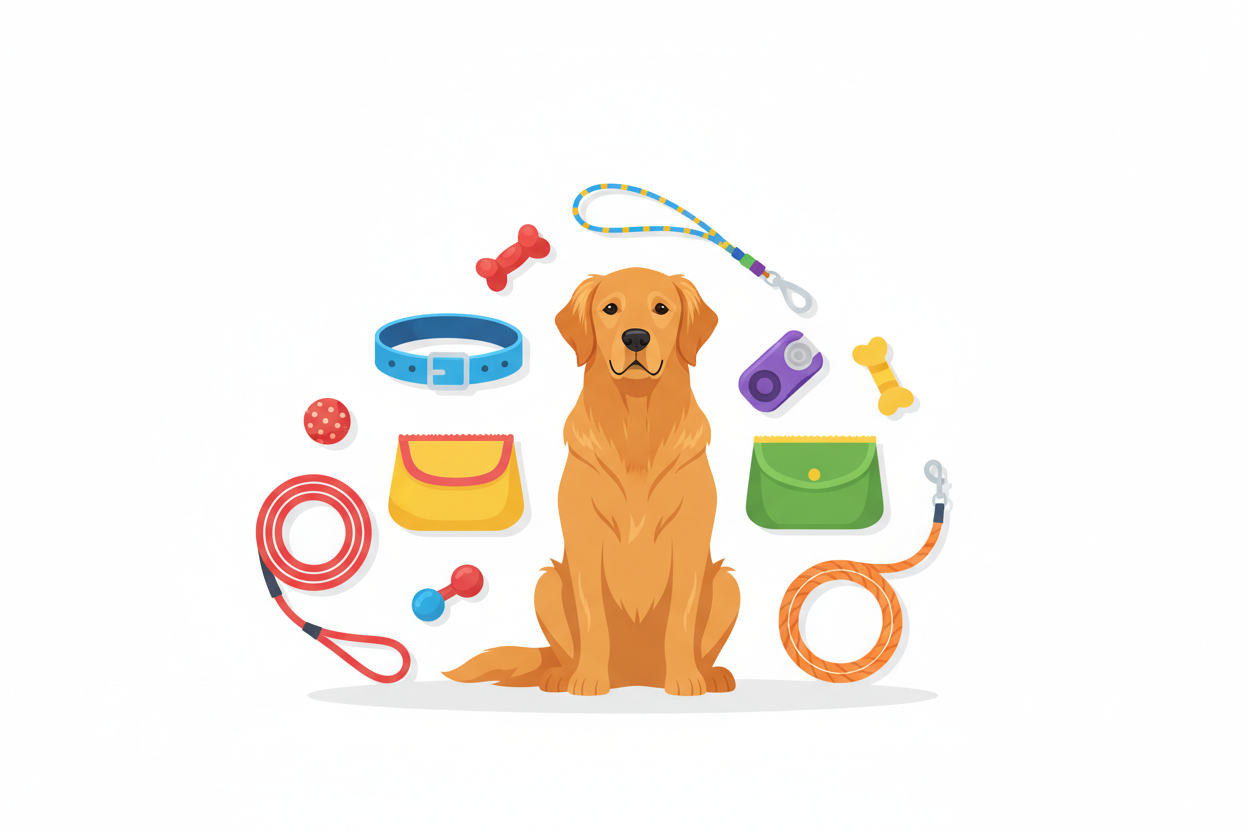
The Impact of Color on Dog Training Tools: How Visual Cues Shape Your Pup’s Learning Experience 🐕
When I first started training my Golden Retriever, Max, I never gave much thought to the colors of the tools I was using. A leash was just a leash, and a toy was just a toy, right? Boy, was I wrong! After years of working with dogs and diving deep into canine behavior research, I’ve discovered that color plays a surprisingly significant role in how effectively our furry friends respond to training tools. Let’s explore this fascinating aspect of dog training that many pet parents overlook.
Table of Contents 📋
• Understanding Canine Color Vision
• The Science Behind Color and Dog Behavior
• Color Psychology in Training Tool Selection
• Best Colors for Different Training Tools
• Colors to Avoid in Dog Training
• Practical Tips for Choosing Color-Coded Training Equipment
• Real-World Applications and Success Stories
• Conclusion
• Frequently Asked Questions
Understanding Canine Color Vision 👁️
Before we dive into how color impacts training effectiveness, it’s crucial to understand how dogs actually see the world around them. Unlike humans who have trichromatic vision (seeing red, green, and blue), dogs have dichromatic vision, similar to humans with red-green color blindness.
Dogs primarily see blues and yellows, while reds appear as brownish-yellow and greens look more like yellow or gray. This means that bright red ball you think stands out so well? Your dog might see it as a muddy brown blob against green grass! Understanding this fundamental difference in perception is the first step toward making smarter choices about training tool colors.
Research conducted by veterinary ophthalmologists has shown that dogs can distinguish between blue and yellow most effectively. They also have excellent motion detection and can see well in low-light conditions, but their color discrimination is limited compared to ours. This knowledge becomes incredibly valuable when selecting training equipment that will capture and maintain your dog’s attention.
The Science Behind Color and Dog Behavior 🧠
The relationship between color and canine behavior isn’t just about visibility – it’s about psychology too. Studies have revealed that certain colors can influence a dog’s emotional state and learning capacity. Blue, for instance, has been associated with calming effects in many animals, including dogs. This is why many veterinary clinics and dog training facilities incorporate blue elements into their environments.
Yellow, being highly visible to dogs, often creates excitement and alertness. It’s no coincidence that many successful training toys come in bright yellow – they’re designed to grab and hold your dog’s attention. The contrast between these colors and the environment also plays a crucial role in how quickly dogs can identify and respond to training cues.
Interestingly, some behavioral studies suggest that dogs may develop color associations through repeated training experiences. If you consistently use a blue clicker for positive reinforcement, your dog might begin to associate the color blue with good things happening, even before hearing the click sound.
Color Psychology in Training Tool Selection 🎨
When choosing colors for training tools, we need to consider both the dog’s visual capabilities and the psychological impact of different hues. Bright, contrasting colors that fall within your dog’s visible spectrum will always be more effective than colors that blend into the background or fall outside their visual range.
The environment where you’ll be training also matters significantly. If you’re training in a park with lots of green grass, a yellow or blue toy will stand out much better than a red one. For indoor training, consider the colors of your flooring, furniture, and walls. A bright yellow clicker might get lost on a yellow couch, but it would pop against a dark blue carpet.
Professional dog trainers often recommend having multiple sets of training tools in different colors for various environments. This approach ensures that your training tools remain visible and effective regardless of where you’re working with your dog.
Best Colors for Different Training Tools 🏆
Clickers and Sound-Based Tools
For clickers and other handheld training devices, bright blue or yellow are excellent choices. These colors are easily visible to dogs and create a strong visual association with the training process. Many trainers prefer blue clickers because the color has a calming effect while still being highly visible.
Training Treats and Food Puzzles
While the color of treats themselves is less important (dogs rely heavily on smell for food), the containers and puzzle toys that hold them should be in contrasting colors. Yellow puzzle toys work exceptionally well because they’re exciting to dogs and easy to spot during training sessions.
Leashes and Collars
For safety and training effectiveness, bright blue or yellow leashes and collars are ideal. They’re visible to both dogs and humans, which is particularly important during evening walks or training sessions. Reflective elements in these colors add an extra safety bonus.
Toys and Reward Items
Training toys should definitely be in colors your dog can see clearly. Yellow balls, blue rope toys, and toys with high contrast patterns work best. Avoid red toys for outdoor use, as they’ll be difficult for your dog to distinguish from the environment.
Colors to Avoid in Dog Training ❌
While understanding which colors work best is important, knowing which ones to avoid can save you time, money, and frustration. Red training tools, while popular among humans, are often ineffective because dogs see them as brownish-yellow, making them blend into many outdoor environments.
Green training tools face similar issues. That bright green frisbee might look fantastic to you, but your dog sees it as yellowish-gray, making it nearly invisible against grass or foliage. Pink and purple tools also fall outside the optimal range for canine vision.
Dark colors like black, brown, or navy blue can be problematic in low-light conditions or against dark backgrounds. While dogs have good night vision, these colors don’t provide the contrast needed for effective training tool identification.
Practical Tips for Choosing Color-Coded Training Equipment 💡
Start by assessing your primary training environments. Make a list of the most common backgrounds your dog will encounter during training – grass, concrete, carpet, sand, etc. Then choose training tool colors that will provide maximum contrast in these settings.
Consider creating a color-coding system for different types of training. For example, use blue tools for calm, focused training sessions and yellow tools for high-energy, exciting activities. This approach helps your dog anticipate the type of training that’s about to begin.
Don’t forget about seasonal considerations. That yellow toy that works great against brown autumn leaves might disappear in a field of yellow spring flowers. Having backup tools in different colors ensures year-round training effectiveness.
When shopping for training equipment, look for products specifically designed with canine vision in mind. Many modern manufacturers are incorporating research about dog color perception into their product designs.
Real-World Applications and Success Stories 🌟
I’ve seen remarkable improvements in training outcomes when clients switch to appropriately colored tools. One memorable case involved a Border Collie named Luna who seemed “stubborn” during fetch training. Her owner was using a red ball that Luna could barely distinguish from the environment. Within days of switching to a bright yellow ball, Luna’s enthusiasm and success rate improved dramatically.
Professional dog sports competitors have long understood the importance of color selection. Agility trainers often use specific colored markers and tools to help dogs navigate courses more effectively. The contrast between equipment colors and the training environment can mean the difference between a clean run and a missed obstacle.
Service dog training programs have also embraced color psychology in their tool selection. Many use blue equipment for calm, focused training sessions and reserve yellow tools for alertness and excitement-based training. This systematic approach helps dogs learn to associate colors with different behavioral expectations.
Conclusion 🎯
The impact of color on dog training tools is far more significant than most pet parents realize. By understanding how dogs see the world and choosing training equipment accordingly, we can dramatically improve communication with our furry friends and accelerate their learning process.
Remember, the best training tool color is one that your dog can see clearly and that creates positive associations through consistent use. Whether you’re teaching basic obedience or advanced tricks, the right color choices can make your training sessions more effective, enjoyable, and successful for both you and your dog.
Take some time to evaluate your current training equipment and consider how color might be impacting your dog’s performance. Sometimes, the simplest changes can lead to the most remarkable improvements in your training journey together! 🐾
Frequently Asked Questions ❓
Can dogs see rainbow colors?
No, dogs cannot see the full rainbow spectrum like humans. They primarily see blues and yellows, with other colors appearing as variations of these hues or as gray.
What’s the best color for a dog training clicker?
Blue or bright yellow clickers work best because these colors are easily visible to dogs and can help create positive visual associations with training.
Do different dog breeds see colors differently?
No, all dog breeds have similar color vision capabilities. The dichromatic vision (blue-yellow spectrum) is consistent across breeds, though individual dogs may have slight variations.
Should I avoid red dog toys completely?
While not completely necessary to avoid, red toys are less effective for training purposes because dogs see them as brownish-yellow, making them harder to distinguish in many environments.
How can I test if my dog can see a training tool clearly?
Try using the tool in different environments and lighting conditions. If your dog consistently has trouble locating or responding to it, consider switching to a more visible color.
Are there any colors that make dogs aggressive?
There’s no scientific evidence that specific colors trigger aggression in dogs. However, some colors may be more stimulating or calming, which could indirectly affect behavior during training.